



Our Vision for Inclusive Learning
Every child deserves the opportunity to learn in an environment where they are seen, supported, and valued.
For some children, traditional learning environments work well. For others, the pace, structure, sensory demands, communication expectations, or behavioral expectations can make learning feel harder than it needs to be.
Circle Creek Cares is beginning to dream about what education can look like when children’s developmental, sensory, social, communication, and learning needs are considered from the beginning.

Rethinking What Learning Can Look Like
Inclusive learning is not about lowering expectations.
It is about creating environments where children can access learning in meaningful ways.
That may include flexible routines, movement, sensory supports, hands-on activities, smaller groups, visual tools, life skills, social-emotional learning, and individualized support.
It means recognizing that children do not all learn the same way — and that different does not mean less capable.
Learning Alongside One Another
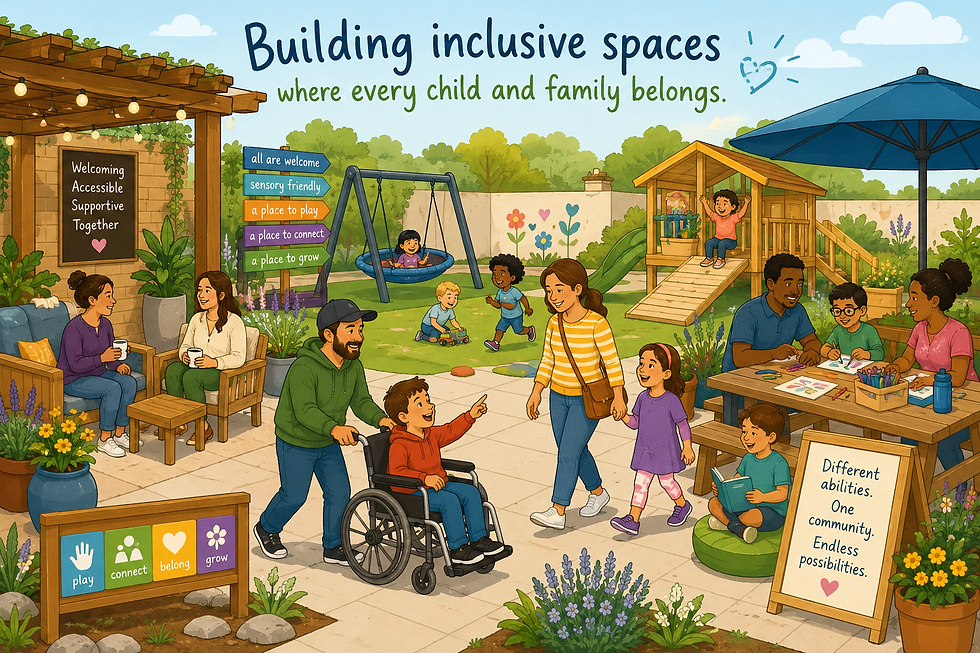
Our vision includes learning spaces where children of varying abilities can grow together.
We believe inclusive environments benefit everyone. Children learn empathy, flexibility, communication, problem-solving, and community. They learn that people think, move, communicate, and participate in different ways.
That kind of learning matters.
It prepares children not just for academics, but for life.
Building Slowly and Thoughtfully
This vision will take time.
Circle Creek Cares is in the early stages of exploring inclusive early learning and academic programming. We want to build carefully, listen to families, understand community needs, and create something sustainable.
Our goal is not to copy a traditional model.
Our goal is to imagine what education can look like when support, belonging, and developmentally responsive learning are built into the foundation.
We are just getting started, but the vision is clear: children deserve learning environments where they can thrive as whole people.


Comments